
The Chemistry Of Scented Pelargoniums
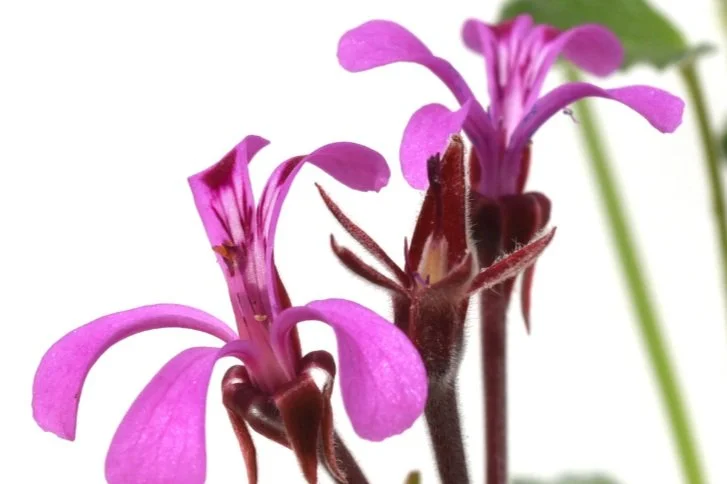
Over 120 different chemical constituents have been identified, varying by species and growing conditions.
Scented pelargoniums are known for their scents and medicinal uses due to the chemical composition of their essential oils. Over 120 different chemical constituents have been identified, varying by species and growing conditions. Notable compounds include citronellol, geraniol, linalool, menthone, isomenthone, limonene, pinene, and methyl eugenol. Pelargoniums also contain flavonoids, tannins, alkaloids, phenols, and other compounds.
The peppermint scent of pelargonium tomentosum is due to the high percentage of isomenthone and menthone. The old-fashioned rose pelargonium graveolens scent is due to a combination of citronellol, citronellyl formate, geraniol beta-caryophyllene, linalool, and geranyl butyrate. The Lemon-scented pelargonium citronellum comes from geranial and neral.
For detailed chemical analysis of other pelargonium species, hybrids, and cultivars check out The Encyclopedia of Herbs: A Comprehensive Reference to Herbs of Flavor and Fragrance, by Arthur O. Tucker and Thomas DeBaggio.